Synthetic baby clothes — polyester, nylon, acrylic — shed microplastics directly onto your newborn's skin, and infant skin absorbs chemicals at a significantly higher rate than adult skin. This isn't a fringe concern. It's a documented biological reality backed by growing peer-reviewed research. If you're searching this at 2am, here's what you actually need to know.
---
What Are Microplastics and Why Are They in Baby Clothes?
Microplastics are plastic particles smaller than 5 millimeters — many are microscopic. Polyester, the most common fabric in baby clothing, is plastic. It's made from polyethylene terephthalate (PET), the same class of material used in plastic bottles. Every time polyester fabric moves, flexes, or is washed, it sheds thousands of these particles.
Every time polyester fabric moves, flexes, or is washed, it sheds thousands of these particles.
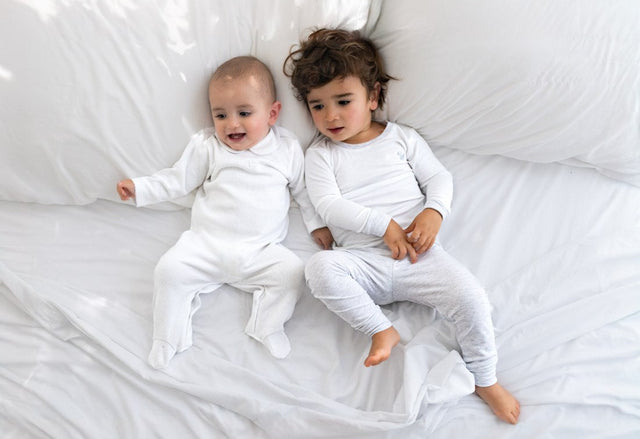
A baby onesie. A fleece sleep sack. A "soft" synthetic swaddle. They're all releasing microplastics in direct contact with your newborn's skin for 16+ hours a day.
---
How Does Newborn Skin Make This Worse?
Newborn skin is not a sealed barrier. It's a developing organ — thinner, more permeable, and structurally different from adult skin in three critical ways:
The stratum corneum (the outermost protective skin layer) is thinner and less fully keratinized in newborns, meaning external substances penetrate more easily. The ratio of skin surface area to body weight in infants is roughly 2.5 times higher than adults, meaning proportionally more skin is exposed per pound of body mass. The skin microbiome is still establishing itself, leaving fewer natural defenses against chemical disruption.
Research published in *Environmental Science & Technology* has identified microplastics in human blood, and subsequent studies have found them in lung tissue, placentas, and breast milk. The absorption pathway from skin contact is an active area of investigation — and the precautionary evidence is substantial enough that waiting for "definitive proof" is not a neutral parenting choice.
---
What Chemicals Come With the Microplastics?
Microplastics rarely travel alone. Polyester and other synthetic fabrics are manufactured with a range of chemical additives that the Environmental Working Group (EWG) and independent researchers have flagged for concern in children's products:
Phthalates — used to soften plastics, classified as endocrine disruptors that can interfere with hormone development. The American Academy of Pediatrics (AAP) has explicitly called on manufacturers to reduce infant exposure to phthalates.
Antimony trioxide — a catalyst used in PET production, classified as a possible carcinogen by the International Agency for Research on Cancer (IARC).
Flame retardants — often added to synthetic textiles, some of which are linked to thyroid disruption and developmental delays in children.
These aren't trace amounts in a lab setting. They're in fabrics pressed against your baby's skin during sleep, feeding, and every hour between.
---
Does Washing Synthetic Baby Clothes Help?
Not meaningfully. Washing polyester actually accelerates microplastic shedding. A single wash cycle of a polyester garment releases an estimated 700,000 microplastic fibers into the water, according to research from Plymouth University. Those fibers go into the water system — and they were already being shed onto your baby before the garment was ever washed.
Pre-washing synthetic fabrics may slightly reduce chemical surface residue, but it does not remove the source of the problem. The fabric itself is the problem.
---

What's the Safest Fabric for a Newborn?
The answer is natural fiber — specifically, long-staple cotton like Peruvian Pima. Here's what that means and why the distinction matters:
Pima cotton is a variety of extra-long staple cotton (ELS) grown primarily in Peru. The longer fibers produce a smoother, denser weave with no synthetic processing required. It contains no plastic. It does not shed microplastics. When washed, it releases cotton fibers — cellulose-based, biodegradable, not petrochemical.
100% Peruvian Pima cotton is not a marketing claim about softness. It's a material choice with direct implications for what your baby's skin is or isn't absorbing.
Learn more about what makes Peruvian Pima different
---
How Do I Know If a Baby Brand Is Actually Using Natural Fabric?
This is where parents get misled most. "Soft," "gentle," "natural feel," and even "organic" on a hang tag do not mean 100% natural fiber. Check the fabric composition label. Common deceptions include:
A garment labeled "organic cotton blend" may contain 40–60% polyester. "Bamboo" fabric is almost always processed into rayon or viscose using chemical processing that strips any natural advantage. "Jersey knit" describes a fabric structure, not a fiber type — it can be 100% polyester.
The only label that matters: 100% cotton, ideally with a verifiable origin like Peruvian Pima. When a brand can't tell you exactly where their cotton comes from and what percentage of the garment is natural fiber, that's your answer.
See how Arubana sources and constructs its fabrics
---
FAQ
Can microplastics really absorb through a baby's skin? Newborn skin is significantly more permeable than adult skin. While direct microplastic skin absorption studies are ongoing, microplastics have been found in human blood and organs, and chemical additives in synthetic fabrics are established skin absorbers. The precautionary case for avoiding synthetics is strong.
Is polyester safe if it's labeled BPA-free? BPA-free means one specific chemical was removed — the fabric still sheds microplastics and may contain phthalates, antimony, and flame retardants. BPA-free is not a safety certification for infant textiles.
How much polyester is too much for a newborn? There's no established safe exposure threshold for microplastics in infants. The AAP's general guidance recommends minimizing infant exposure to endocrine-disrupting chemicals wherever possible — clothing is a controllable variable.
Does 100% cotton mean no chemicals at all? Conventionally grown cotton uses pesticides, and residues can remain in the fiber. Look for either GOTS-certified organic cotton or Peruvian Pima from a brand that provides sourcing transparency. See Arubana's care and sourcing standards
Are microplastics in baby clothes a new problem? Synthetic fabrics have been in children's clothing since the 1970s. Microplastic research has accelerated significantly since 2015, and we are only beginning to understand cumulative infant exposure. Newer is not safer — the research is catching up to a long-standing exposure.
---
The Fabric Your Baby Wears Is a Health Decision
Polyester is plastic. Your newborn's skin is permeable. Those two facts, together, are why fabric choice matters more than most baby product decisions you'll make this year.
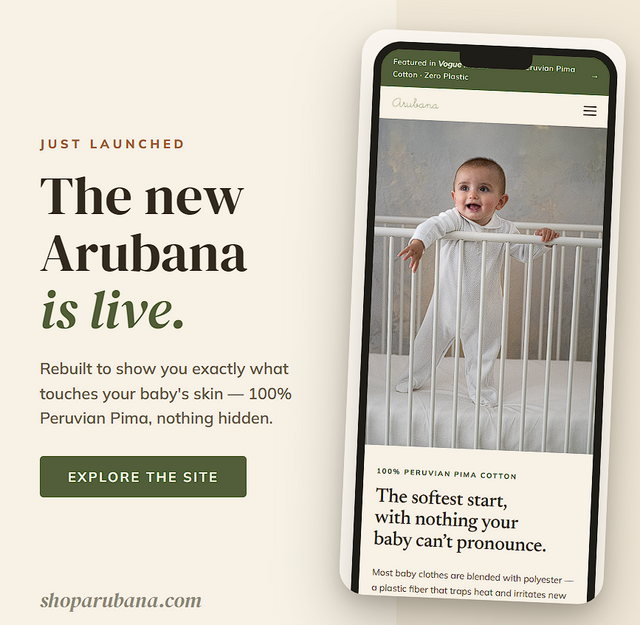
Arubana makes 100% Peruvian Pima cotton clothing for babies and toddlers — small batch, USA-based, no synthetic blends, no shortcuts on material.